Self-Storage Loans and Financing
Acquisition, refinance, conversion and construction financing for storage owners, operators and investors
Who this is for
Storage Owners, Operators and Developers With a Defined Plan
Storage financing works best when the capital source fits the borrower and what the facility needs to do. These are the sponsors this page is written for.
Owner-Operators
Operators who run their own facilities and want to buy the real estate, expand or acquire another location, typically through SBA 504 or 7(a) financing.
Investors Buying Stabilized Facilities
Buyers acquiring or refinancing facilities with an operating history, placed with banks, credit unions or conduit sources based on occupancy and coverage.
Lease-Up, Value-Add and Conversion Sponsors
Sponsors repositioning a facility or converting retail and office space, financed with bridge loans and a clear takeout to permanent debt.
Ground-Up Developers
Developers building new facilities under a ground-up construction loan, with a market study, committed equity and a lease-up plan the interest reserve can carry.

Self-Storage Financing Options
INSIGNIA Financial Services arranges commercial real estate financing for self-storage acquisitions, refinances, conversions, repositionings and ground-up development. We structure the request, match it to the banks, credit unions, SBA lenders, bridge lenders and conduit sources whose appetite fits the facility and the sponsor, and manage the process through closing.
Storage underwrites differently from other property types. Lenders look through headline occupancy to economic occupancy, in-place rents against street rates, expense ratios and the supply pipeline in the trade area, and the right capital source depends on whether the sponsor is an investor, an owner-operator or a developer. The sections below set out which sources fit which situation, what each one underwrites, and where each one stops being the right answer.
- Capital sources
- Bank and credit union
- SBA 504 and 7(a)
- Bridge and conversion
- Ground-up
- Underwriting
- Parameters
- When not the best fit
- Documents
- FAQs
Capital Sources by Situation
The first decision is who the borrower is and what the facility needs to do over the next three to five years. A stabilized facility with a track record, a lease-up with a business plan, and an owner-operator buying a building for the business are three different credit stories and go to different capital.
| Situation | Typical capital sources | Primary underwriting focus |
|---|---|---|
| Stabilized acquisition or refinance (investor) | Bank and credit union term loans; CMBS conduit for larger stabilized assets | Economic occupancy, in-place debt service coverage, debt yield, sponsor liquidity |
| Owner-operator buying or expanding a facility | SBA 504 and 7(a); bank term loans | Operating company cash flow, owner guarantees, equity and eligibility |
| Lease-up, renovation or turnaround | Bridge loans; bank loans with reserves where the history supports it | Business plan, time to stabilization, interest carry, takeout |
| Conversion of retail, office or industrial space | Bridge or construction financing; SBA for a qualifying operator | Entitlements, conversion budget, as-completed value, sponsor experience |
| Ground-up development | Construction loans; SBA 504 for a qualifying operator | Feasibility and supply study, equity, lease-up reserves, takeout plan |
| Portfolio of facilities | Bank or credit union relationship financing; conduit; blanket structures | Concentration, cross-collateralization, market diversification, sponsor depth |
Discuss your storage transaction with an advisor
Send us the property, the business plan and the loan amount you are targeting, and we will recommend the capital sources that fit before you spend time on outreach.
Permanent Financing: Banks and Credit Unions
For stabilized facilities, banks and credit unions are usually the starting point. We place permanent financing for acquisitions and refinances nationwide, using relationships with regional banks, credit unions, credit union participation platforms and institutional sources. Our pages on bank loans for commercial real estate and credit union loans explain how each channel works, including which platforms accept broker submissions only.
As an indicative range, conventional financing on a stabilized facility generally calls for 25% to 35% equity, an in-place debt service coverage ratio of at least 1.20x on the proposed loan, and physical occupancy of 90% or greater. Facilities below those marks are usually better placed with bridge capital until the business plan is delivered. Recourse, amortization and prepayment terms vary by lender and are a larger part of the decision than most borrowers expect, so we compare structure and certainty of execution alongside leverage.
SBA 504 and 7(a) for Owner-Operators
SBA financing is a strong fit for an operator who owns and runs the storage business, and a poor fit for a passive investor. SBA programs require the borrower to operate an eligible business and occupy the property for that business. A facility owned by one entity and leased to an unrelated third-party operator generally does not qualify. Confirm eligibility and how the SBA's occupancy and passive-income rules apply to a specific facility, including its office and unit rental space, before the structure is set.
SBA 504
The SBA 504 program combines a first mortgage from a bank or other lender, typically about 50% of project cost, with a second-position debenture issued through a Certified Development Company, up to 40% and capped at $5 million, and a borrower contribution of typically 10%. It can fund land, ground-up construction, an existing building with renovation, and equipment. The debenture carries a long-term fixed rate set when the debenture is sold, fully amortizing, with no balloon on that portion. Some property types are treated as special purpose, which can raise the equity requirement to 15%, and to 20% where a new business or ground-up project is also involved. How a particular storage facility is classified should be confirmed with the CDC early.
SBA 7(a)
The SBA 7(a) program is more flexible in use: acquiring or expanding a facility, buying an established storage business, purchasing a property the operator currently leases, funding technology, and refinancing eligible debt. Loans can reach $5 million, with terms of up to 25 years on real estate. The SBA guaranty is 85% on loans of $150,000 or less and 75% above that amount. That guaranty applies to the lender's exposure and is not a loan-to-cost figure. Real estate loan-to-cost on a 7(a) loan commonly reaches 90%, depending on the lender and the borrower's equity.
Program-specific detail is on our SBA 504 and 7(a) page, with separate pages for the 504 and 7(a) programs. SBA rules change, and guarantees from the principals are required, so we confirm current requirements with the SBA lender or CDC before we advise on structure.
Bridge, Repositioning and Conversion Financing
Bridge capital fits a facility that does not yet meet permanent loan criteria: a lease-up with occupancy below the permanent threshold, a property that needs renovation or expansion, an asset in turnaround, or a vacant retail or office building being converted to storage. Indicatively, bridge loans on storage range from $1 million to $10 million, with terms of 6 to 48 months and interest-only payments. The loan is underwritten to the business plan, so lenders weigh the sponsor's track record, the conversion budget and contingency, interest and operating reserves, the as-stabilized value and, most importantly, the takeout.
See our bridge loan page for structure, and private money loans where a transaction falls outside bank and institutional guidelines. Where improvements qualify, C-PACE financing can sometimes fund part of the cost outside the primary loan.
Ground-Up Storage Development
Ground-up storage is underwritten on the market study as much as on the sponsor. Lenders want evidence on square feet of storage per capita in the trade area, the competing pipeline within a three to five mile radius, rent comparables for the unit mix, and a lease-up schedule that the interest reserve can survive. Equity is typically required before the loan funds, and the takeout from construction to permanent debt should be planned at the outset. Our ground-up construction loan page covers the structure in detail, including draws, retainage and takeout.
Property Types We Finance
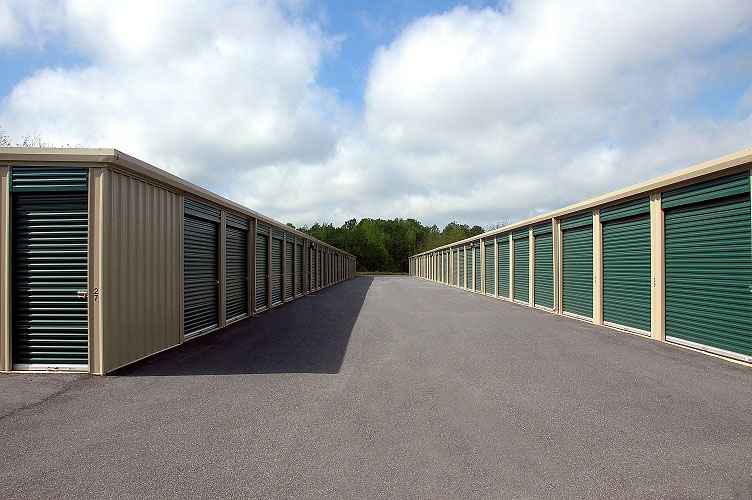
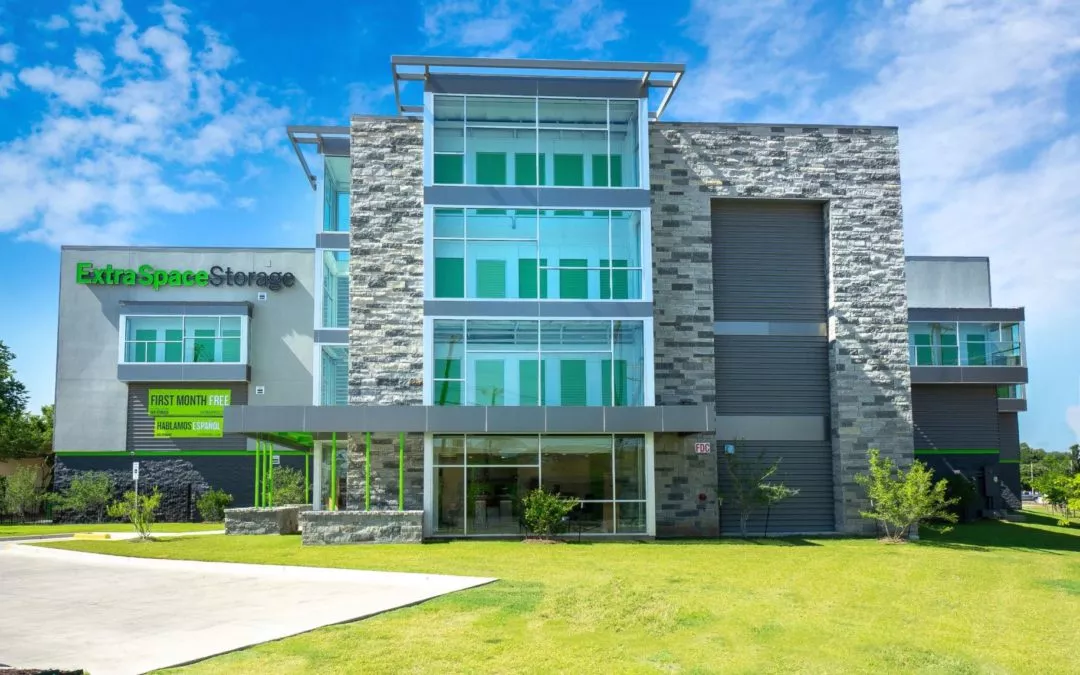
We arrange financing for drive-up single-story facilities, modern multi-story facilities, climate-controlled buildings, and specialty storage including vehicle, boat and RV storage, wine storage and document storage. Lenders treat each differently, particularly on valuation, construction type and the share of revenue that comes from non-unit income such as tenant protection plans, truck rental and retail sales.
What Lenders Underwrite on Self-Storage
| Factor | What lenders look at | Why it matters |
|---|---|---|
| Physical versus economic occupancy | Units occupied versus collected rent after concessions, delinquencies and discounts | Loans are sized on economic occupancy, which can run well below the physical figure |
| In-place versus street rents | Rent roll by unit type and tenure against current advertised rates | A wide gap signals either upside or a stale rent roll, and lenders haircut unsupported upside |
| Rate management | History of existing-customer rate increases and the move-out rate that followed | Tests whether in-place income is durable |
| Expenses and management | Payroll, marketing, property tax reassessment on sale, and a market management fee even if self-managed | Underwritten NOI normally differs from seller NOI |
| Supply and competition | Storage square feet per capita, new construction and entitled projects nearby | New supply is the main source of lease-up and rate risk |
| Sponsor and operator | Storage experience, liquidity, net worth, real estate owned schedule | Drives leverage, recourse and bridge lender appetite |
| Debt service coverage and debt yield | Coverage on proposed debt service and NOI relative to the loan amount | Sets the maximum loan regardless of the appraised value |
Model coverage and loan sizing before you approach lenders with our DSCR calculator, the loan calculators and the guide to debt yield, and read how LTV, DSCR and debt yield interact in loan sizing. We do not post loan rates. Pricing is set as a spread over benchmark indices, which are shown on our interest rates page.
Indicative Program Parameters
| Source | Leverage | Term | Recourse |
|---|---|---|---|
| Bank or credit union term loan | About 65% to 75% of value, with 25% to 35% equity | Commonly 5 to 10 years, amortization up to 25 years | Frequently full or partial |
| SBA 504 | Up to 90% of project cost; lower for special purpose or new business projects | 10, 20 or 25 year debenture; first mortgage set by the lender | Guarantees from owners of 20% or more and the operating company |
| SBA 7(a) | Often up to 90% of cost on real estate | Up to 25 years on real estate | Guarantees from principal owners |
| Bridge | Sized to the business plan and as-stabilized value | 6 to 48 months, interest-only | Varies by lender and sponsor |
| CMBS conduit | Sized to coverage and debt yield on stabilized income | Typically fixed rate with a longer term | Non-recourse with standard carve-outs |
When Each Option Is Not the Best Fit
- SBA programs are generally not available to a passive investor who leases the facility to a third-party operator, and the added process is not worth it for an owner who cannot meet the occupancy and eligibility rules.
- Bank and credit union term loans are a weak fit below the occupancy threshold or during lease-up, where the loan is better structured as bridge debt with a planned takeout.
- CMBS conduit generally favors stabilized assets with institutional-quality reporting. Smaller facilities and lease-ups are often better served by bank, credit union or bridge capital.
- Bridge loans add cost and a refinancing event, so they are the wrong tool where the facility already supports permanent debt on acceptable terms.
- Ground-up construction without a current market study, entitlements and committed equity rarely moves past a lender's first screen.
How INSIGNIA Arranges Self-Storage Financing
We begin with the facility, the sponsor and the objective, and screen the request against lender appetite before anything is submitted. We then package the transaction, including normalized operating statements, rent roll analysis, a sponsor summary and the business plan, and approach the lenders most likely to execute. Term sheets are compared on structure, recourse, reserves and certainty of closing, not only on leverage, and we coordinate diligence, third-party reports, legal documents and closing. INSIGNIA arranges financing; representative transactions show the range of structures we have placed, and our loan program comparison and the guide to capital sources and loan types show how the options compare.
Information Needed to Evaluate a Storage Loan
Acquisition or refinance
- Rent roll with unit mix, size, rate, tenure and delinquency
- Trailing 12-month and year-to-date operating statements
- Purchase contract or most recent appraisal
- Sponsor real estate owned schedule and personal financial statement
- Entity structure chart and management agreement
Conversion, repositioning or construction
- Project budget with contingency and a draw schedule
- Plans, entitlement status and contractor information
- Market and feasibility study with supply analysis
- Lease-up projection and takeout plan
- Sponsor and operator storage experience
For SBA requests we also need business tax returns and financial statements for the operating company and a summary of owner ownership, in addition to the property items above.
Start with the facility, not a form
Tell us what you are buying, refinancing or building, and we will respond with the structures that fit, the information each lender will ask for and a realistic read on certainty of execution.
Self-Storage Loan FAQs
What leverage can I expect on a self-storage loan?
It depends on the source. Conventional lenders typically require 25% to 35% equity on a stabilized facility. SBA programs can reach 90% of project cost for a qualifying owner-operator. Bridge loans are sized to the business plan and the as-stabilized value. The table above shows indicative ranges, and actual leverage depends on coverage, debt yield, occupancy and sponsor strength.
Can an investor use an SBA loan to buy a storage facility?
Generally not if the investor is passive. SBA programs require the borrower to operate an eligible business and occupy the property. An investor who plans to operate the facility directly as a business may qualify, subject to the SBA lender's review of eligibility and occupancy rules.
What is the difference between SBA 504 and 7(a) for storage?
The 504 program pairs a first mortgage with a long-term fixed-rate debenture and is built for real estate and equipment. The 7(a) program is more flexible, covering acquisition, business purchase, equipment, working capital and refinancing, with a lender-set rate that is often variable. Which one fits depends on the use of proceeds, the amount and the borrower's equity.
What occupancy do lenders require for permanent financing?
Banks and credit unions commonly look for physical occupancy of 90% or greater and an in-place debt service coverage ratio of at least 1.20x. Facilities below that range usually point to bridge financing with a plan to refinance at stabilization.
Can you finance a retail or office conversion to storage?
Yes, through bridge or construction financing, and through SBA programs for a qualifying operator. Lenders will focus on entitlements, the conversion budget and contingency, the sponsor's experience and the as-completed value.
Do you finance ground-up storage development?
Yes. Ground-up storage requires a market and feasibility study, committed equity, lease-up reserves and a takeout plan. See our ground-up construction loans page for how those loans are structured.
Do you finance storage portfolios?
Portfolio requests are evaluated case by case, with attention to concentration, cross-collateralization, market diversification and the operator's platform. Structure is usually a blanket loan, a set of individual loans from one lender relationship, or a conduit execution for larger stabilized portfolios.
How are self-storage loans priced?
Pricing is set by the lender and varies with the property, the sponsor, the structure and market conditions. It is typically quoted as a spread over a benchmark index such as Treasury, SOFR or Prime. INSIGNIA does not post loan rates; current index levels are on our interest rates page.
In which states does INSIGNIA arrange financing?
We arrange financing nationwide, with the exception of Alaska, Arizona, Maine, Minnesota, Nebraska, Nevada, North Dakota, South Dakota and Vermont.
Ready to discuss a storage financing?
A short call is usually enough to identify the right capital source and the information you will need to bring.
This page provides general information for business borrowers and is not an offer of financing or a statement of current pricing. Program parameters are indicative, vary by lender, property type and sponsor, and change without notice. SBA program rules are set by the SBA and its participating lenders and Certified Development Companies. All loans are subject to credit approval.
Contact Us
The team at INSIGNIA Financial Services is available to discuss your financing needs and answer any questions you may have.
Send us a secure message using the form below.